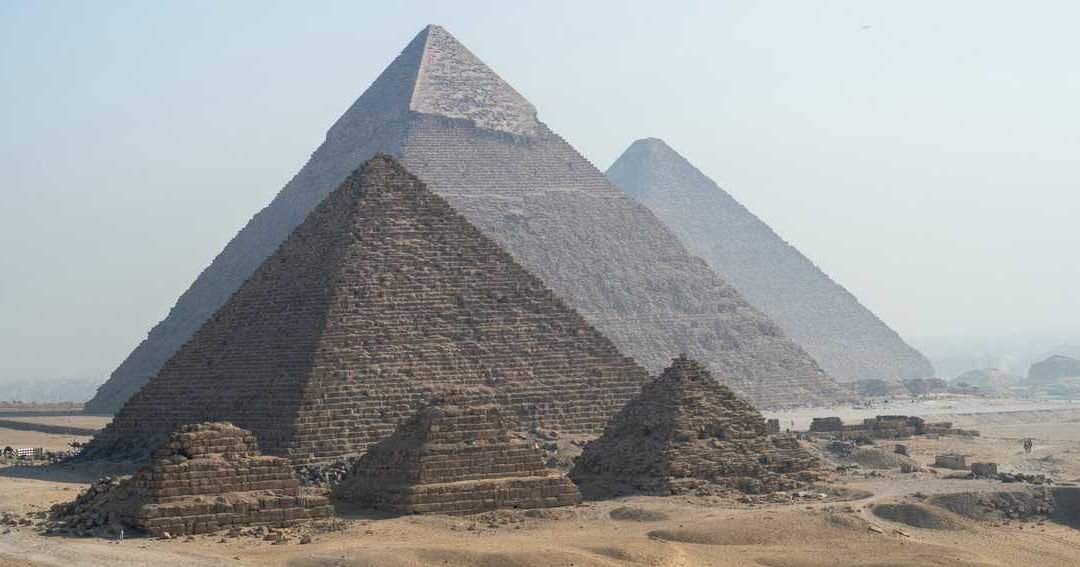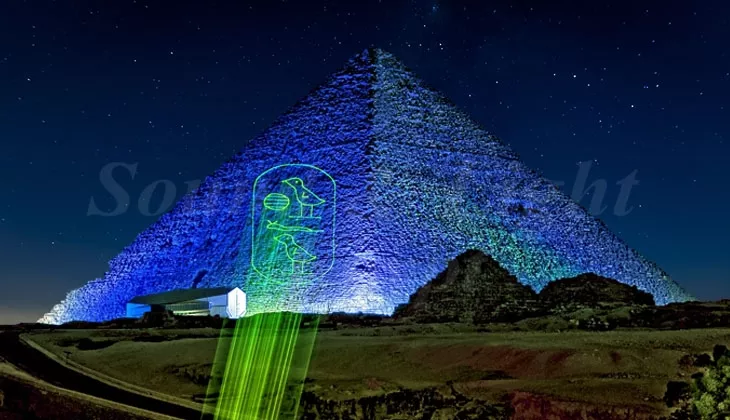
The Sound and Light Show at the Giza Plateau is a nightly outdoor programme that uses the Great Sphinx as narrator and the three pyramids as the stage. It retells the story of Khufu, Khafre, and Menkaure, and it is sold as a way to sit in front of the monuments after dark rather than as a museum lecture.
The pitch is simple. Thousands of years after the pharaohs, the pyramids still raise the same questions about how they were built, and the Sphinx still sits as the guard of the plateau. The show walks that story in lights, recorded narration, and music. Visitors pick one of 10 languages so the same script can be heard in the language they actually use.
What the show actually covers
The programme is built around the three kings whose pyramids dominate Giza: Khufu (the Great Pyramid), Khafre, and Menkaure. The Sphinx is the storyteller. The narration is meant to unpack the building of the pyramids, the role of the Sphinx as protector, and the broader pharaonic history attached to this stretch of desert.
It is not a walk-through of the chambers. You stay seated in the outdoor theatre facing the monuments. The pyramids and Sphinx are lit in sequence while the soundtrack and voiceover carry the plot. That is why operators sell it as a “portal” to ancient Egypt: the buildings do not move; the lighting and the script do the work.
If you have already done the daytime plateau visit, this is a different product. Day tickets are about climbing the site in heat and dust. The evening show is about sitting still, hearing the kings named, and watching colour wash over limestone that is usually a uniform beige by sunset.
Languages, who it is for, and how booking works
The show is offered in 10 languages. That matters if you are travelling with a mixed group: one booking can still mean different audio tracks depending on how the operator assigns seats and headsets or loudspeakers for that language block. Confirm the language of your timeslot when you pay, not after you arrive.
Tickets are sold online, and the operator states that shows booked through its websites get priority and are held without a visitor cap, which it frames as a professionalism and integrity promise to customers. In practice that means: if you want a guaranteed evening, book on the official sales site rather than turning up at the gate and hoping the language you need still has space.
There is a hard operational rule for the second show of the night. It runs only with a minimum of 5 foreign individuals or 5 Arabic tickets. Thursday is the exception: Thursday is a full show, so that minimum does not apply. If your plan is a quiet midweek second sitting, five people in the right ticket category is the floor. A pair or a family of four can be turned away or merged into another sitting if that floor is not met.
Prices for 2026
Published prices from the operator are:
- Standard adult ticket: $20
- Reduced rate listed at $11
- Children from 6 to 12 years: $26
Those figures are as printed on the sales copy. The $26 child band is higher than the $20 adult figure, so treat it as a listed tariff, not a typo you should “correct” at the gate. Confirm the current band when you check out, because evening tourism products in Giza change rates without a long public notice period.
The copy also points visitors to the Sound and Light show schedule, pyramid visiting hours, and online ticket purchase in the same place. Use that page for the night you are actually travelling. Language rotation, sunset time, and Ramadan or public-holiday changes all sit on the schedule, not in a static price line.
How to use a Giza night without wasting the day
Most visitors do the plateau in daylight and the show after dinner, or they skip the day site entirely and only come for the lights. Both work. What does not work is assuming the second show is automatic. Check the calendar for Thursday (full second show) versus other nights (five-ticket minimum). If you are a solo traveller or a couple, either book the first show or join a group that already has the headcount.
Bring a light jacket. The desert drops after sunset even when the afternoon was hot. Seating is outdoor. Photography of the lit pyramids is the usual reason people come; flash and drones are a separate ruleset at the plateau, so follow staff on the night rather than copying what you saw on social media.
Combine the booking with a clear transfer plan. Taxis and ride-hailing from central Cairo or Giza hotels are the default. The show ends late relative to Metro hours, so do not count on the last train unless you have checked that day’s last departure from Giza or Sphinx-adjacent stations.
Practical Details
What: Pyramids Sound and Light Show at the Giza Plateau, narrated as if by the Sphinx, covering Khufu, Khafre, and Menkaure, in 10 languages.
When: Nightly outdoor programme. Check the current Sound and Light schedule and pyramid timing before you travel. The second show requires a minimum of 5 foreign individuals or 5 Arabic tickets, except Thursday, when it is a full show. Website bookings are given priority and are held without a limit.
Prices: $20; $11; children 6 to 12 years $26 (operator-listed figures). Confirm at checkout.
Address: Giza Plateau / Pyramids of Giza Sound and Light theatre, Giza, Egypt, in front of the Great Pyramids and the Sphinx.
Nearest transit: Giza district, west of central Cairo. Closest Metro context is the Giza line / Giza station area, then a taxi or microbus to the plateau (the theatre is not at the Metro door). Ride-hailing from Dokki, Mohandessin, or pyramid-road hotels is the usual last leg.
Tickets and schedule: View the Sound and Light show schedule, pyramid timing, and Giza pyramids tickets on the official booking site.