Egypt's New Archaeological Icon
The Grand Egyptian Museum, often called the GEM, is the largest archaeological museum in the world dedicated to a single civilization. It stands on the Giza plateau just 2 kilometers from the pyramids, housing more than 100,000 artifacts that span 5,000 years of ancient Egyptian history. After years of delays, the museum began a phased opening in 2024, with select galleries and the main atrium welcoming visitors while final preparations continue on the full Tutankhamun collection and other sections.
The building itself is a statement. A translucent stone facade shifts in colour through the day, catching the desert light and forming a visual bridge to the nearby pyramids. The museum spans roughly 500,000 square meters of floor space, with galleries arranged chronologically from predynastic Egypt through the Greco-Roman period. For anyone interested in ancient Egypt, the GEM is now the single most important museum stop in the country.
The Hanging Obelisk and the Grand Staircase
Two features define the GEM experience before you even reach the galleries. The first is the hanging obelisk, suspended in the main atrium so that visitors can walk beneath it and look up through its centre. The second is the Grand Staircase, a sweeping inclined gallery that ascends past monumental statues of pharaohs and gods, including a colossal 3,200-year-old statue of Ramses II that once stood in Memphis. The staircase alone holds dozens of artifacts that would be headline exhibits in any other museum.
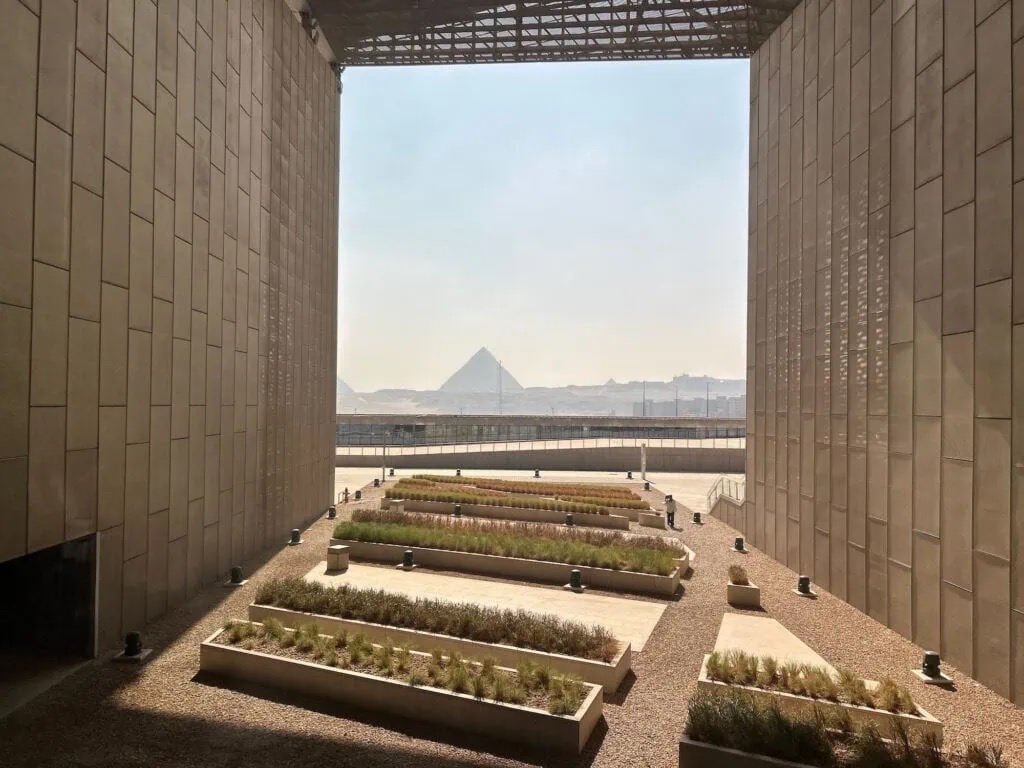
At the top of the Grand Staircase, a glass wall frames a view of the pyramids, a deliberate design choice that connects the museum's artifacts to the monuments where many of them were found. It is one of the most photographed spots in the building, and worth reaching early before tour groups fill the space.
The Ramses II Statue
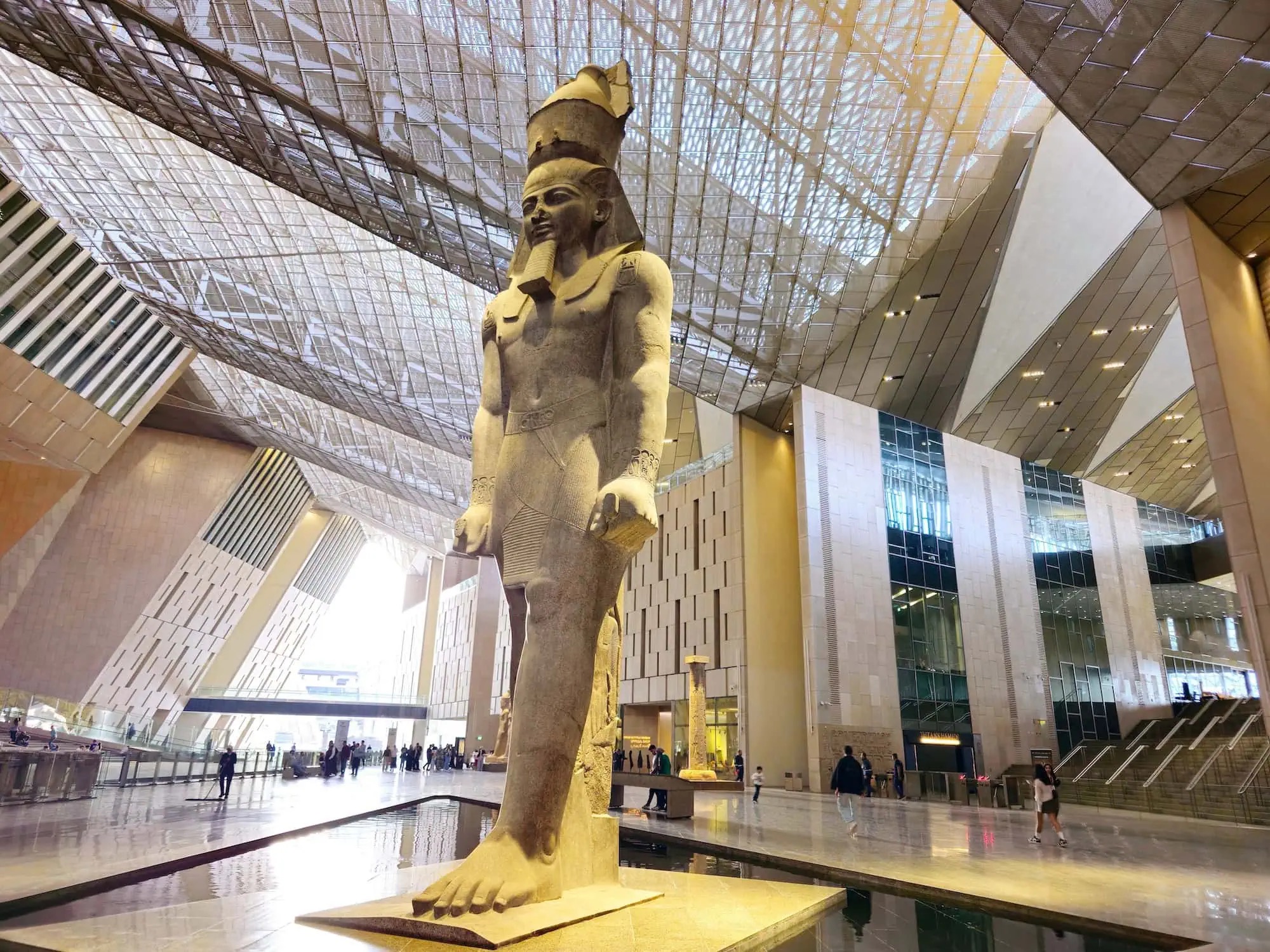
The colossal Ramses II statue dominates the atrium. It weighs over 80 tons and stands more than 9 meters tall, originally carved from a single block of red granite. The statue was moved to the GEM from Cairo's Ramses Square in 2018 in a carefully choreographed overnight operation. Standing beneath it gives a sense of scale that no photograph can convey, and it sets the tone for the monumental sculpture throughout the museum.
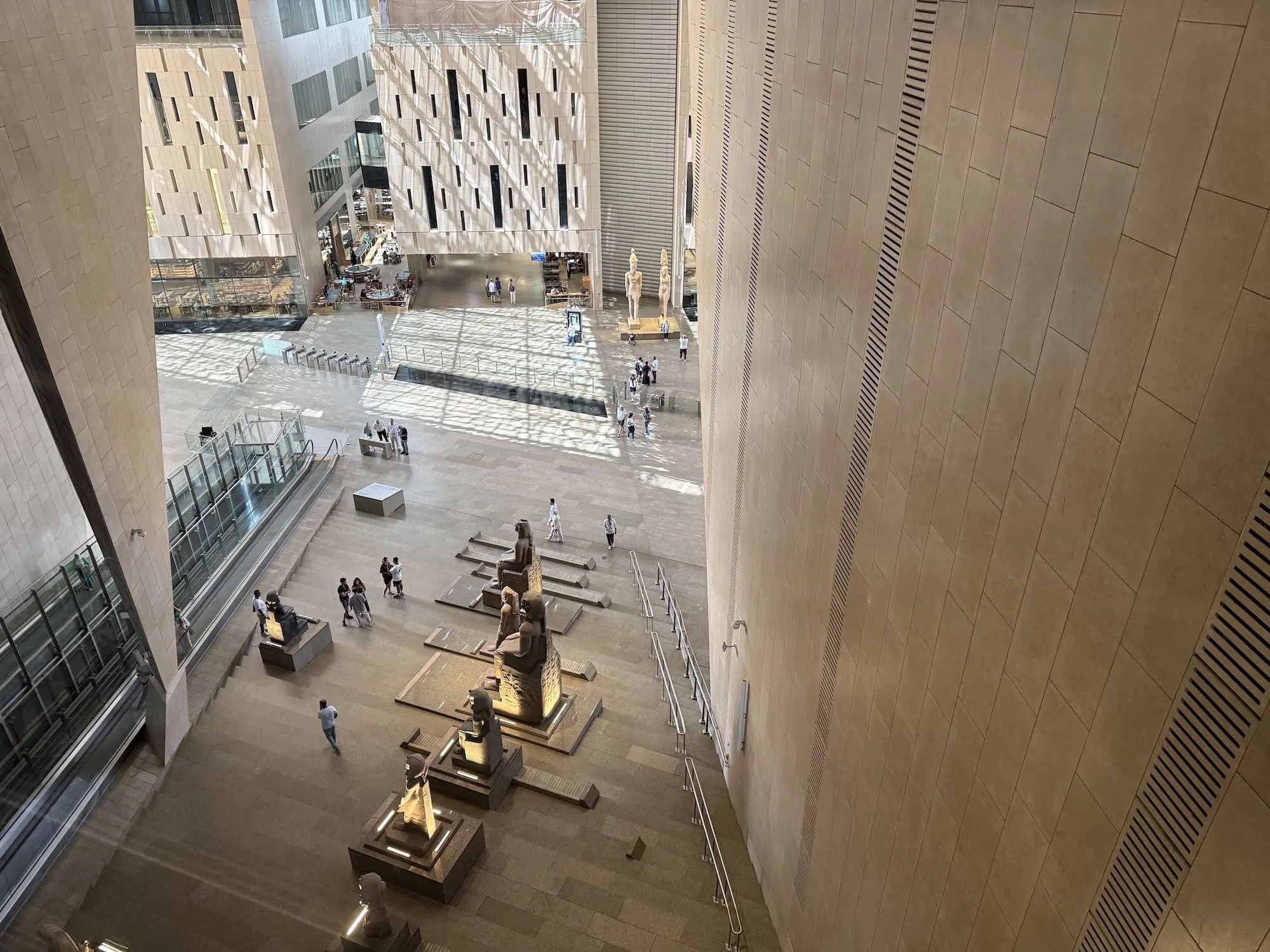
Nearby, the atrium also houses the hanging obelisk and a collection of smaller royal statues that introduce visitors to the dynasties they will encounter in the galleries above. Plan to spend at least 20 minutes in this entrance space alone, because it is dense with objects that would normally warrant a room to themselves.
How the GEM Compares to the Old Egyptian Museum in Tahrir
The old Egyptian Museum in Tahrir Square opened in 1902 and has been the default home of Egypt's antiquities for more than a century. Its cluttered vitrines and dim lighting have a certain old-world charm, but they make it hard to appreciate individual objects. The GEM is the opposite, with spacious, climate-controlled galleries, modern lighting, and interpretive displays that explain context rather than just labelling artifacts. Many of the headline pieces from Tahrir, including the Tutankhamun treasures, are being relocated to the GEM, leaving the Tahrir museum to focus on other periods and a smaller selection of highlights.
For visitors with limited time, the GEM is now the better single museum stop, especially if it is paired with a morning at the pyramids. The Tahrir museum is still worth visiting for the Royal Mummy Hall and the atmosphere, but plan for a longer Cairo stay if you want to do both justice.
Tickets, Hours, and Location
Standard admission to the Grand Egyptian Museum costs EGP 1200 for foreign visitors, with reduced prices for Egyptian nationals and students. Tickets are timed-entry and should be booked in advance through the official channels, especially during the October to April peak season when morning slots often sell out. The museum opens daily at 9:00 am and closes at 6:00 pm, with last entry at 4:00 pm. Extended evening hours until 8:00 pm run on selected weekends during peak periods.
Most visitors spend 3 to 4 hours in the main galleries, though a thorough visit can easily fill a full day. The museum sits about 20 kilometers from central Cairo, a 35-minute drive in light traffic and over an hour during rush hour. An Uber from downtown typically costs EGP 200 to EGP 300. Because the museum is only 2 kilometers from the pyramids, combining both in a single day is practical if you start early and pace yourself. Bring comfortable shoes, since the distances inside the complex are substantial.