A Guardian Carved From the Bedrock
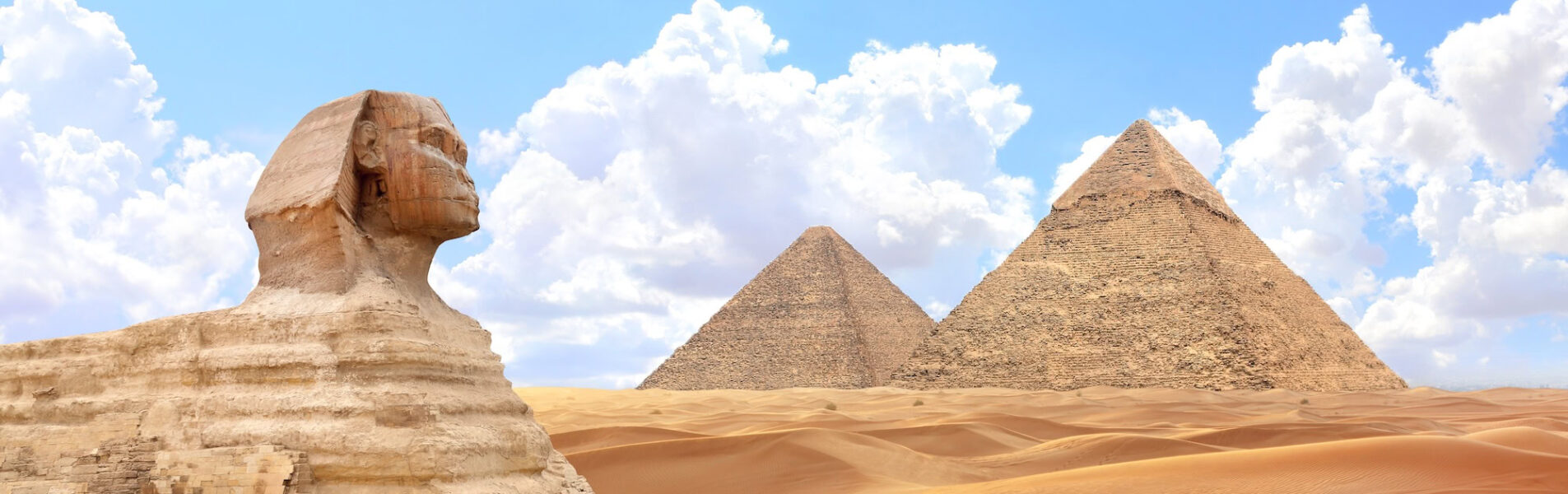
The Great Sphinx of Giza is the oldest and largest monumental sculpture in Egypt, carved directly from a single limestone outcrop around 2500 BC during the reign of Pharaoh Khafre. It crouches on the Giza plateau just east of Khafre's pyramid, facing the rising sun, and most Egyptologists believe its face was modelled on Khafre himself. Combining a human head with a lion's body, the Sphinx symbolised royal power and divine protection, guarding the pyramid complex and the passage of the dead pharaoh into the afterlife.
The Sphinx measures 73 meters long and 20 meters high, roughly the length of a football pitch and the height of a six-story building. Its front paws alone stretch 15 meters. The body was carved from the natural bedrock of the plateau, while the head, which sits above ground level, was shaped from a harder layer of limestone. Over the centuries the softer body has eroded far more than the head, which is why the Sphinx today looks almost disproportionate, a small head atop a worn and rounded body.
The Missing Nose and the Napoleon Myth
The Sphinx's missing nose is its most famous feature, and the popular story blames Napoleon Bonaparte's soldiers for shooting it off with a cannon during his 1798 campaign in Egypt. This is a myth. Drawings made decades before Napoleon arrived already show the nose missing, and the real cause is more likely deliberate damage by a Sufi religious leader in the 14th century who considered the Sphinx an idol. The nose was never found at the site, and the damage is consistent with chisels rather than cannon fire.
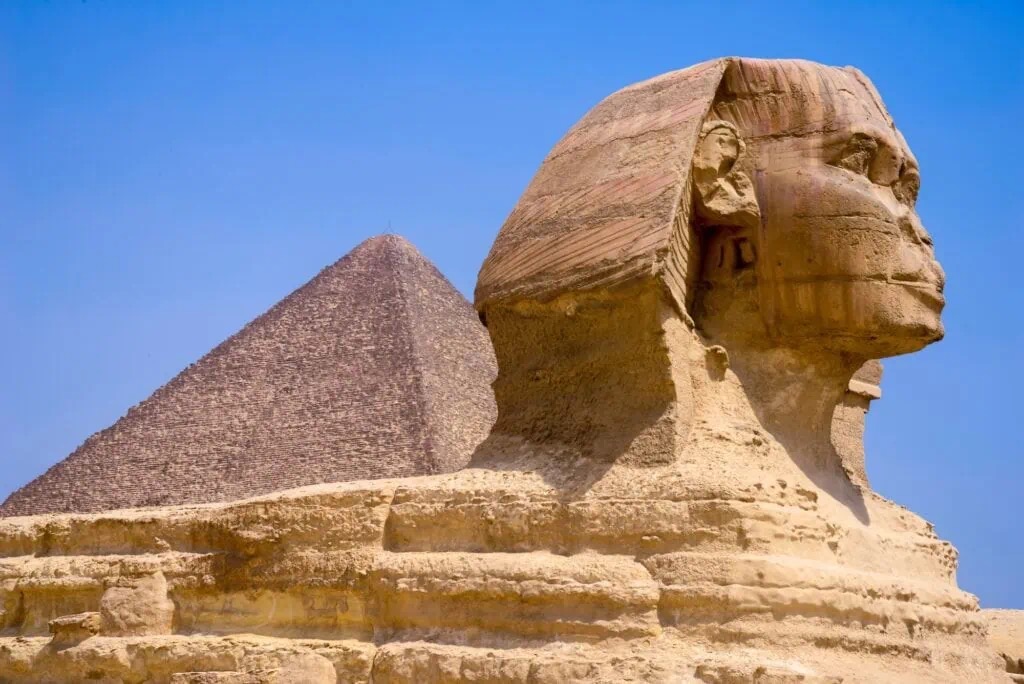
The Sphinx also lost its ceremonial beard, fragments of which were found between its paws and are now held in the British Museum. The beard was likely added long after the original carving, possibly during the New Kingdom period. The famous red granite Dream Stele, erected by Pharaoh Thutmose IV around 1400 BC, stands between the Sphinx's front paws and records a dream in which the Sphinx promised Thutmose the throne in exchange for clearing away the sand that had buried its body.
The Dream Stele Between the Paws
The Dream Stele is one of the most important historical artifacts on the Giza plateau. It tells how a young Prince Thutmose fell asleep near the Sphinx after a hunting trip and dreamed that the Sphinx, identifying itself as the god Horemakhet, asked him to clear away the desert sand that had swallowed its body. In return, the Sphinx promised him the kingship of Egypt. Thutmose did clear the sand, became pharaoh, and erected the stele to commemorate the bargain.
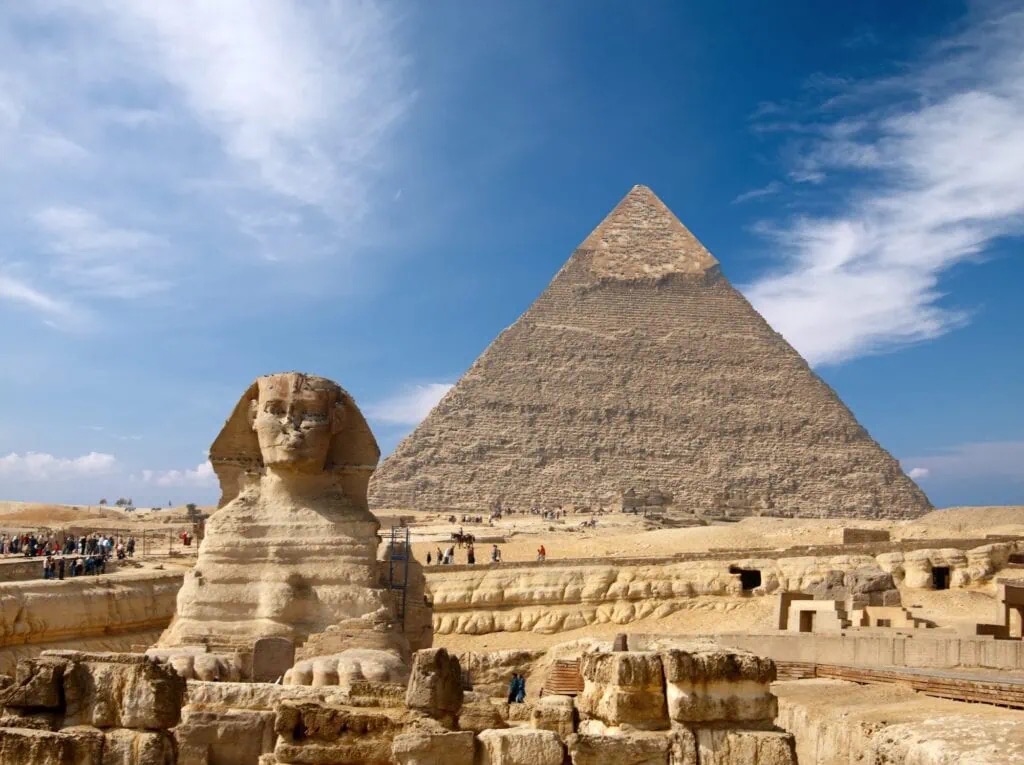
The stele stands roughly 4 meters tall and is carved with hieroglyphs that remain legible after more than 3,400 years. Visitors cannot walk right up to it, but it is clearly visible from the viewing platform a few meters away. The text is a rare example of an ancient Egyptian royal inscription that links a pharaoh's legitimacy directly to a divine encounter at Giza.
Accessing the Sphinx From the Pyramid Complex
The Sphinx is included in the same general entry ticket to the Giza complex, which costs EGP 540 for foreign visitors. You do not need a separate ticket unless you want access to a special viewing area or a guided tour that takes you closer to the monument. The Sphinx sits at the eastern edge of the plateau, a short walk downhill from the Great Pyramid, and most visitors see it either at the start or the end of their plateau tour.
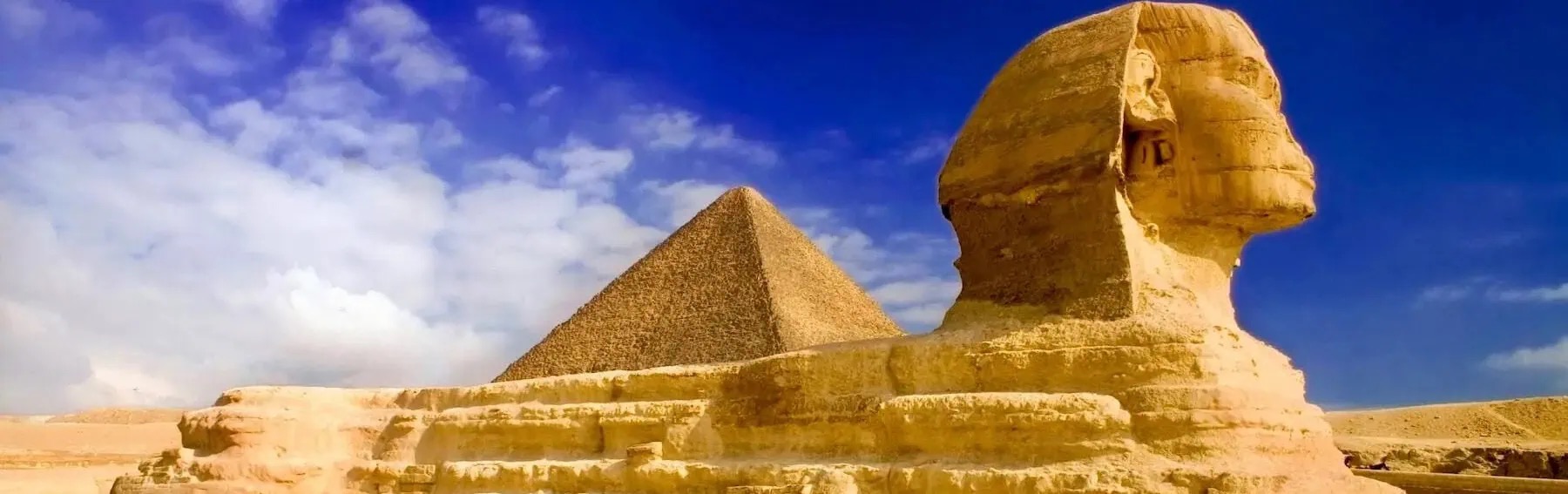
A dedicated viewing terrace gives the classic photo angle with the Sphinx in the foreground and Khafre's pyramid rising behind it. From late morning onward this terrace gets crowded, so for the cleanest shots aim to be there before 9:00 am or after 4:00 pm.
Photo Tips for the Sphinx
Morning light is the most flattering for the Sphinx. Between 8:00 am and 10:00 am the sun hits the face and front paws at a low angle, bringing out the texture of the weathered limestone and the detail of the nemes headdress. By early afternoon the flat overhead light washes out the features and the heat haze softens the background pyramids. Late afternoon, around 4:00 pm in winter, gives a warm side light that works well for wide shots of the Sphinx and the plateau together.
A telephoto lens of around 100 to 200mm helps compress the Sphinx and the pyramids into a single frame from the viewing terrace. A wide-angle lens is better for shots that include visitors in the foreground to convey scale. Drone photography is restricted over the Giza plateau and requires a special permit from the Egyptian military, so plan accordingly if aerial shots matter to you.