The Only Surviving Wonder of the Ancient World
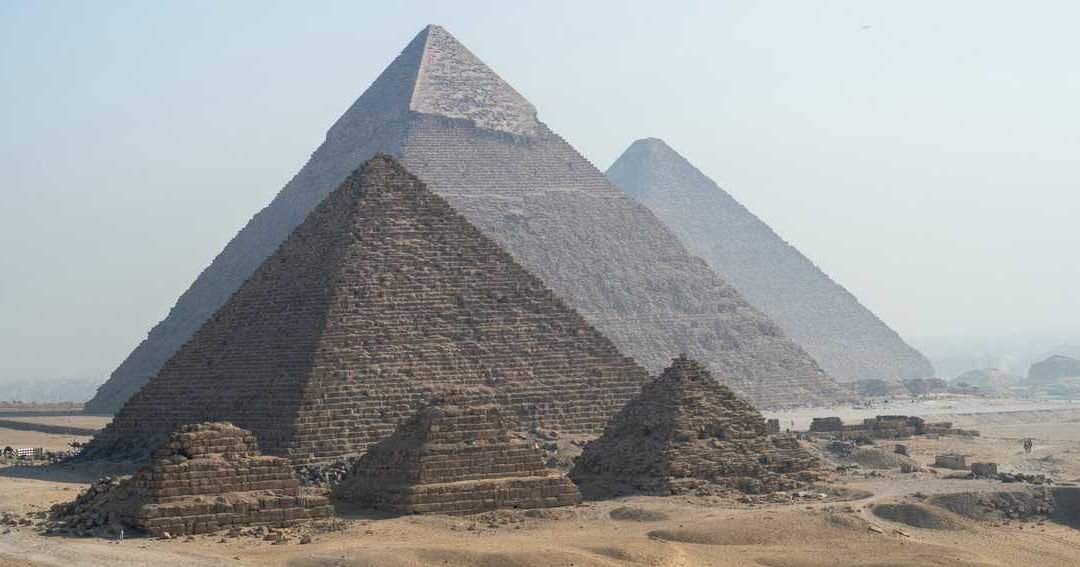
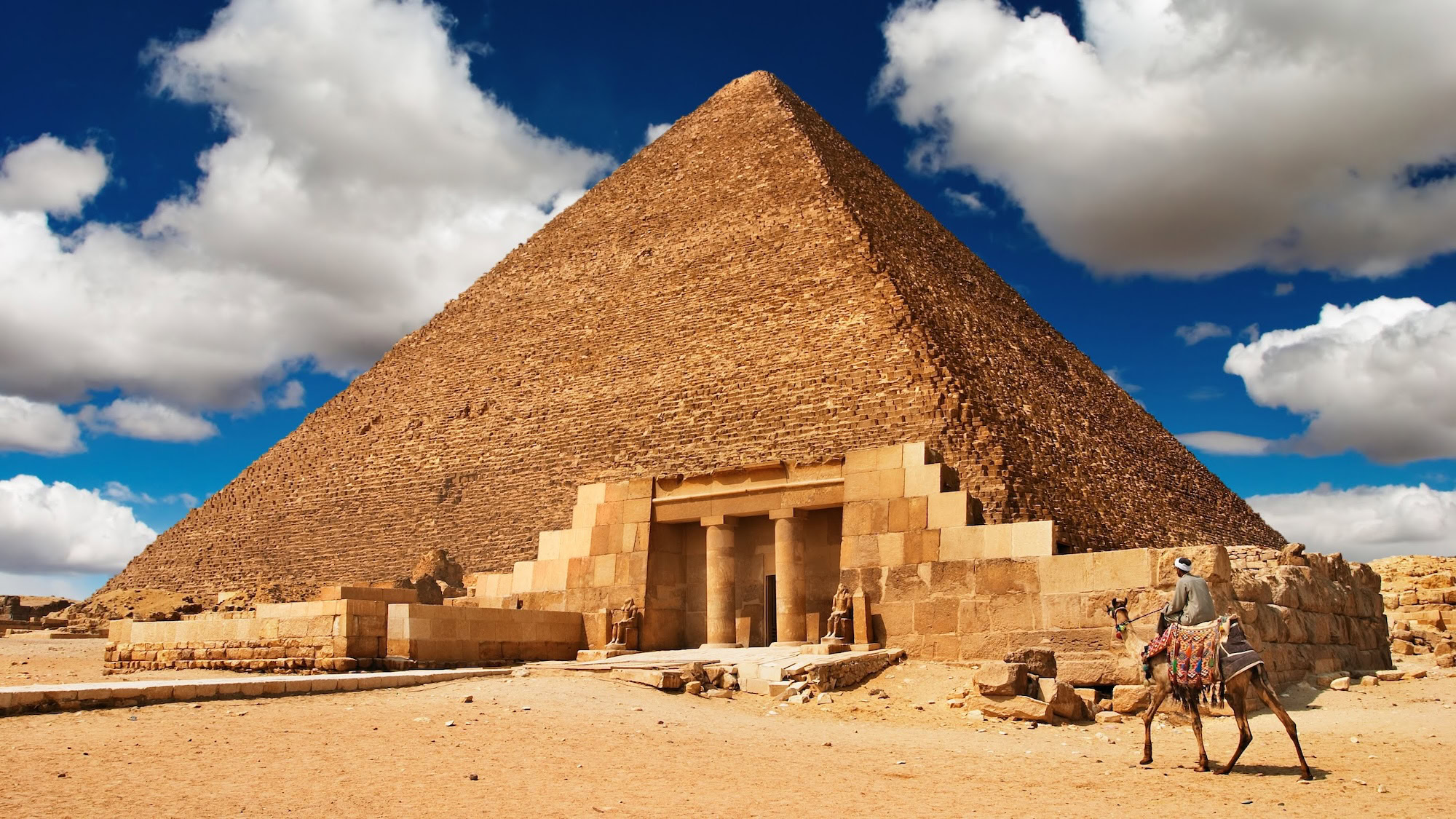
The Giza pyramid complex is the headline act of any trip to Egypt. Three colossal pyramids, built during the Fourth Dynasty around 4,500 years ago, rise from the desert plateau about 20 kilometers southwest of central Cairo. The Great Pyramid of Khufu, the largest of the three, originally stood 146.5 meters tall and held the title of the world's tallest human-made structure for nearly 3,800 years. Seeing it in person, the sheer scale of roughly 2.3 million limestone blocks, each weighing between 2.5 and 15 tons, silences most first-time visitors.
Khafre's pyramid appears taller from many angles because it sits on higher ground, but it actually measures 143.5 meters. Its mortuary temple is better preserved than Khufu's, with granite columns still visible. Menkaure's pyramid, the smallest of the trio at 65 meters, originally wore a granite casing on its lower courses that has largely survived the centuries. Together the three pyramids form a sightline that has barely changed since the Fourth Dynasty, and that continuity is what makes standing here feel strange and moving.
Opening Hours and Ticket Prices
The Giza complex opens daily at 8:00 am. In summer the gates stay open until 5:00 pm, while winter hours close at 4:00 pm. General entry costs EGP 540 for foreign visitors and covers the plateau, the Great Sphinx, and the area around the three pyramids. To actually step inside the Great Pyramid of Khufu you pay a separate EGP 900 ticket, and only 300 visitors are allowed inside each day, so arriving early matters. Entry to the Khafre and Menkaure interiors is cheaper, around EGP 60 to EGP 100, and availability rotates based on conservation work.
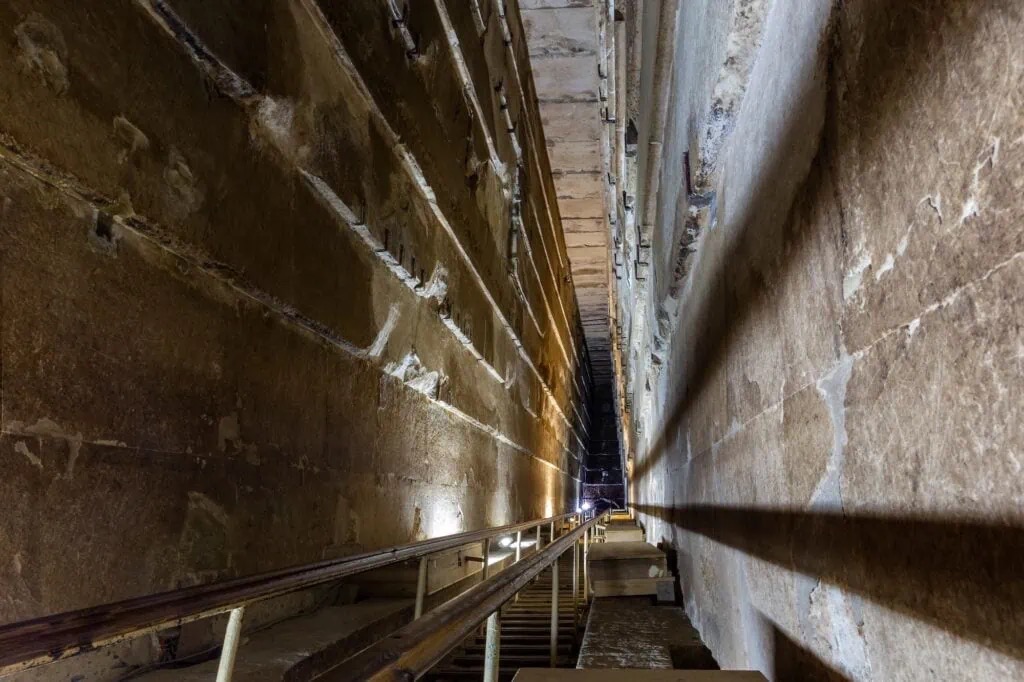
Inside the Great Pyramid you will find the Grand Gallery, a 47-meter ascending corridor with a corbelled ceiling that rises 8.6 meters. It is a steep, narrow, sweaty climb, and anyone with claustrophobia should think twice. Photography is allowed but flash is not. The King's Chamber sits at the top and contains a single plain sarcophagus, the only object left behind by ancient robbers who stripped everything else over the centuries.
Beating the Tour Buses
The single best decision you can make is to arrive at 8:00 am sharp. Tour buses from Red Sea resorts and Nile cruise groups start rolling in around 9:30 am, and by 11:00 am the plateau can feel like a busy parking lot. An 8:00 am visit gives you cooler air, softer light for photos, and roughly 90 minutes of relative quiet near the Great Pyramid before the crowds thicken.
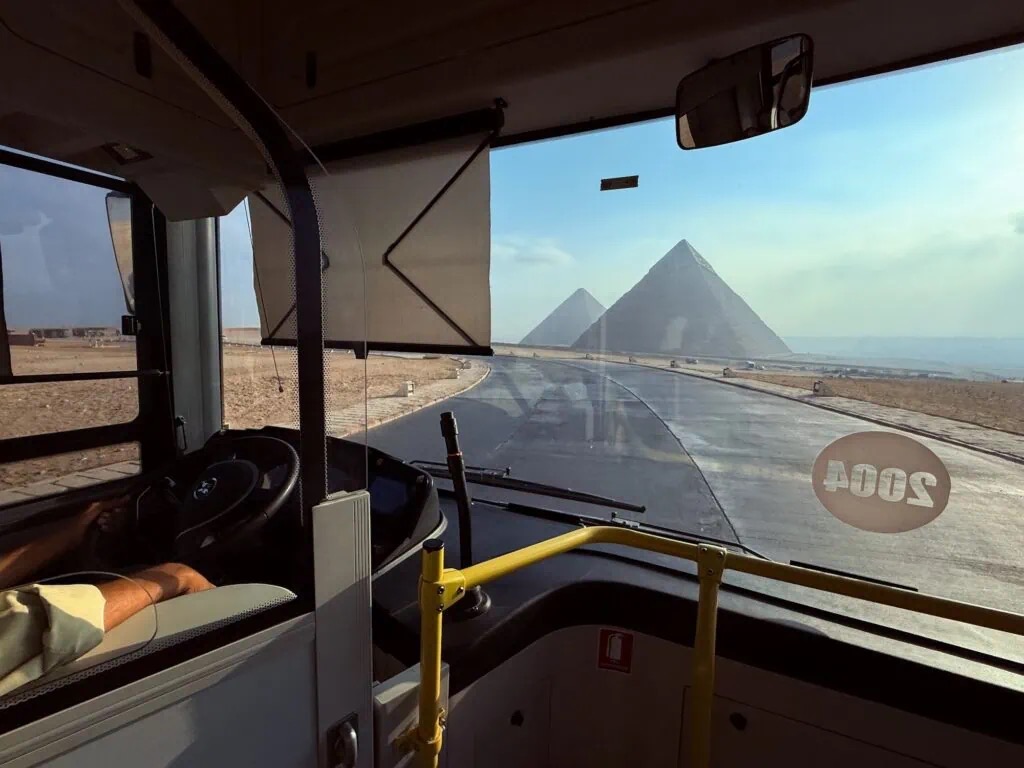
Late afternoon, around 4:00 pm in winter, is the second sweet spot. The light goes golden, the day-trippers have left, and the pyramids silhouette cleanly against the Cairo skyline. Avoid midday between June and August, when temperatures regularly exceed 35 degrees Celsius and there is almost no shade on the plateau.
Getting There From Cairo
An Uber from downtown Cairo, Zamalek, or Garden City to the main entrance typically costs EGP 150 to EGP 200 and takes 30 to 45 minutes depending on traffic. Ride-hailing is reliable in Giza and removes the haggling that comes with street taxis. For budget travelers, Metro Line 2 runs to Giza station for a few pounds, followed by a short taxi or microbus ride to the plateau.
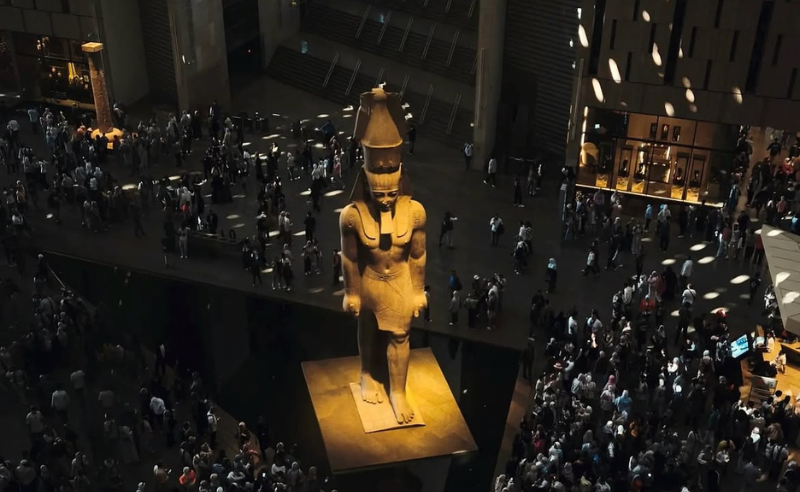
If you want to visit multiple sites in one day, the Grand Egyptian Museum sits just 2 kilometers from the pyramids and pairs naturally with a morning at Giza. Many drivers accept a flat fee for a half-day waiting arrangement, which usually works out cheaper than booking separate rides.
What to Wear and Bring
Wear lightweight, breathable clothing that covers shoulders and knees, both for sun protection and respect at a site with cultural sensitivity. Closed-toe shoes with grip are essential if you plan to enter any pyramid interior, because the passages are steep, narrow, and dusty. Bring a wide-brimmed hat, sunglasses, sunscreen, and at least a liter of water per person. In winter mornings, a light jacket helps before the temperature climbs. Leave large bags at the hotel, since security screening is airport-style and oversized items slow you down.
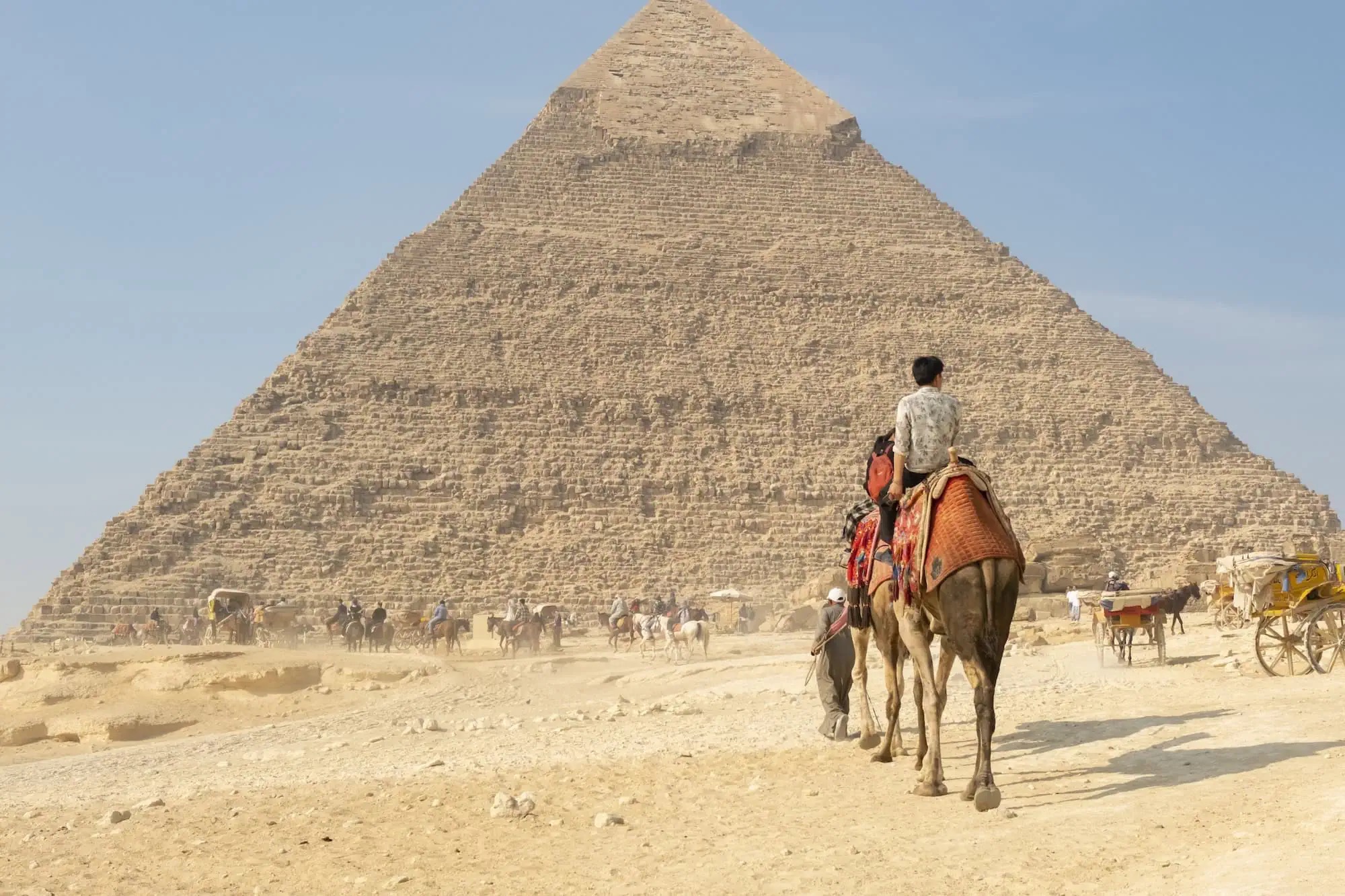
A camel or horse ride around the plateau is part of the Giza experience for many visitors, but choose an operator who treats their animals well and agree on the price before mounting up. Walking the perimeter is free, often quieter, and gives a better sense of the pyramids' true scale than a rushed camel sprint.