The World's Oldest Pyramid
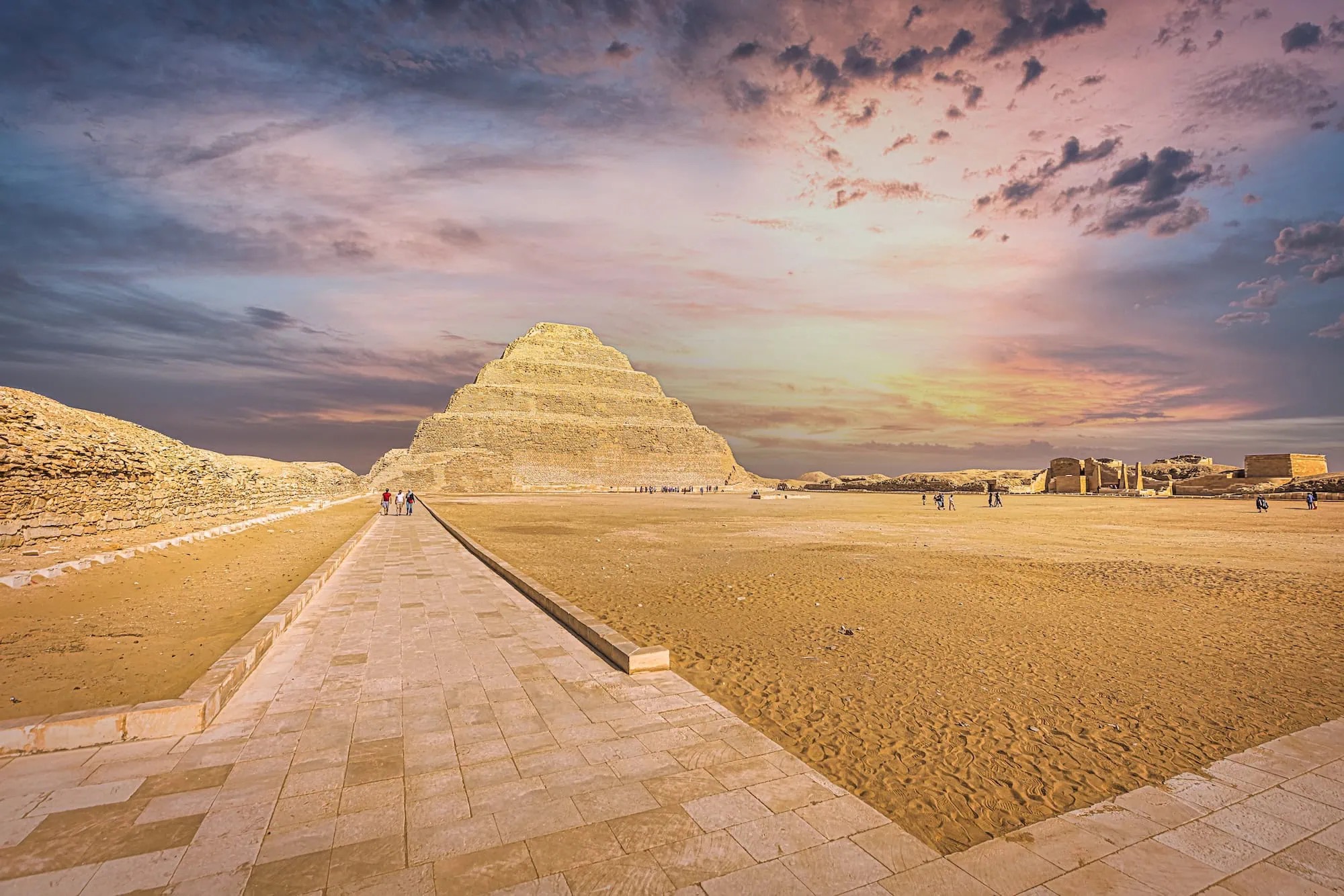
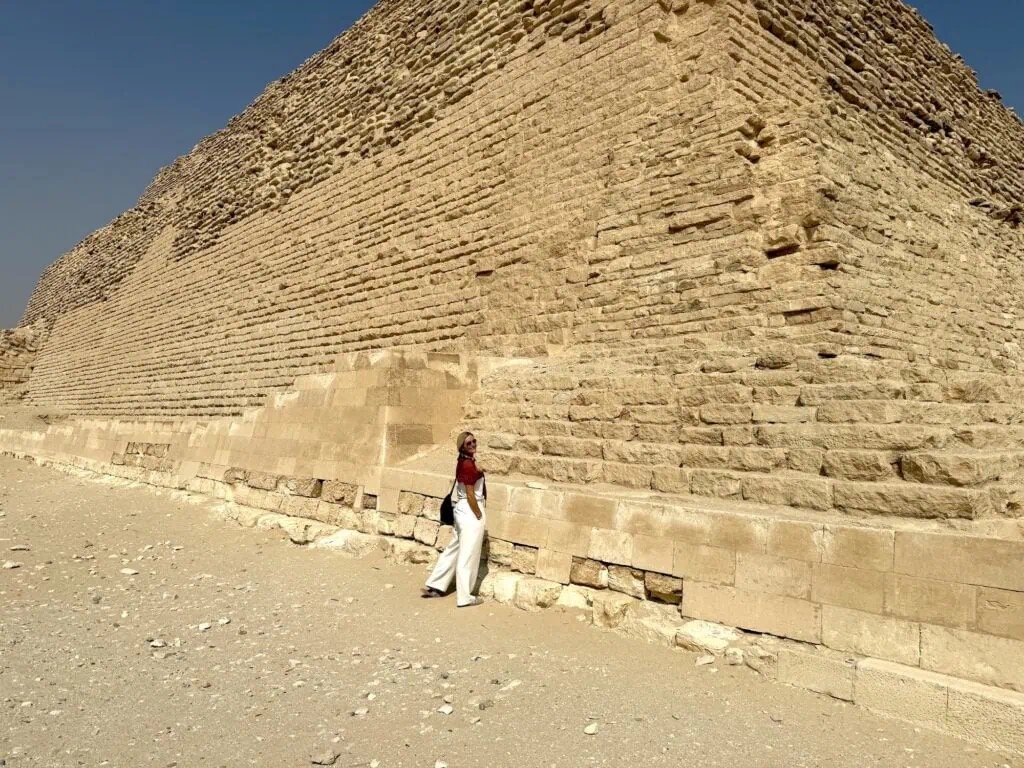
The Step Pyramid of Djoser at Saqqara is the oldest stone monument of its size in the world, built around 2700 BC during Egypt's Third Dynasty. It predates the Great Pyramid of Khufu by several centuries and marks the moment when Egyptian architecture leapt from mud-brick mastabas to monumental cut stone. The pyramid rises in six distinct tiers to a height of roughly 62 meters, and its stepped silhouette is instantly recognisable from across the desert.
The architect behind it was Imhotep, a polymath who served as chancellor to Pharaoh Djoser and was later deified as a god of wisdom and medicine. Imhotep's innovation was to stack six mastabas of decreasing size on top of each other, creating the form that all later Egyptian pyramids would build upon. Walking around the complex, you are standing at the literal starting point of pyramid architecture.
The Funerary Complex of Djoser
The Step Pyramid does not stand alone. It sits inside a 15-hectare funerary complex enclosed by a limestone wall, the largest of its kind from the Old Kingdom. The complex includes a Heb-sed court with dummy buildings whose solid facades represent different Egyptian architectural styles, a colonnade entrance with 40 ribbed limestone columns, and a series of ceremonial courtyards where Djoser would have performed the ritual runs that proved his continued vigour as pharaoh.
Beneath the pyramid itself lies a network of tunnels, shafts, and chambers extending over 5.5 kilometers. The burial chamber sits 28 meters below ground, sealed by a three-ton granite plug. Several underground rooms are decorated with blue-green faience tiles that recreate the reed matting of Djoser's palace in permanent stone. A separate ticket is required to enter the interior, and visitor numbers are limited for conservation reasons.
The Serapeum
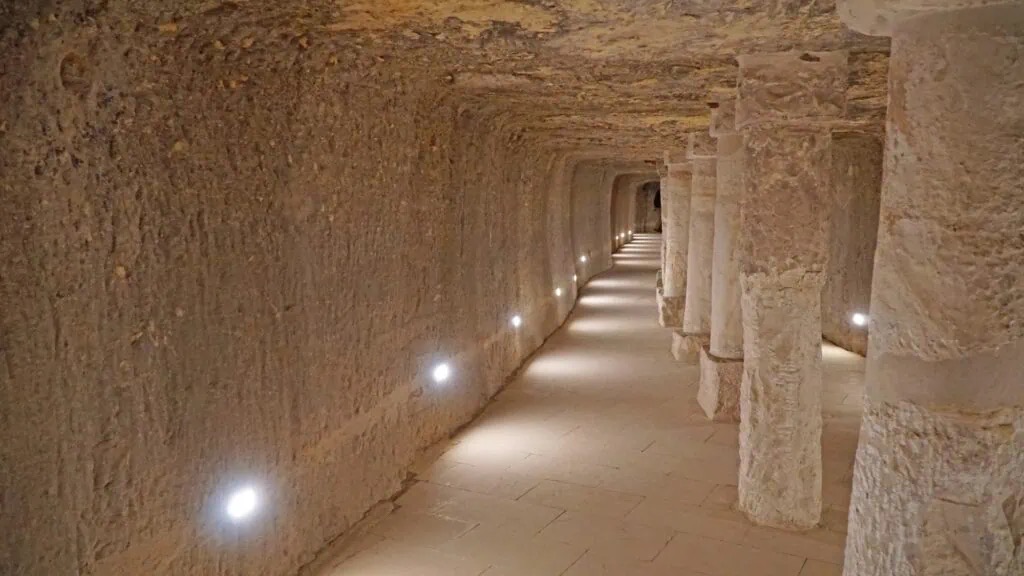
The Serapeum is Saqqara's most mysterious monument, an underground catacomb that housed the mummified remains of the Apis bulls, sacred animals worshipped as living incarnations of the god Ptah. The galleries stretch hundreds of meters through solid limestone and contain 24 massive granite sarcophagi, each weighing up to 80 tons and carved from a single block.
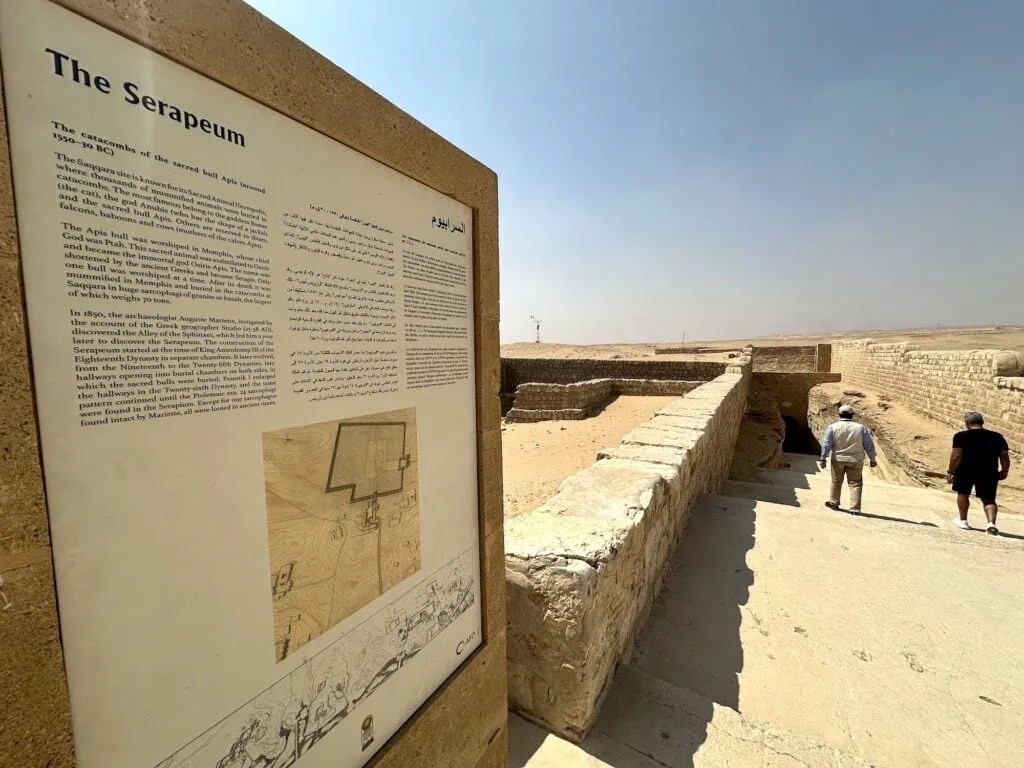
How workers manoeuvred 80-ton sarcophagi through narrow passages remains debated by archaeologists. The precision of the carving, with smooth surfaces and tight tolerances, challenges modern engineering explanations. The Serapeum was discovered in 1851 by Auguste Mariette, who followed a processional route lined with sphinx statues to the buried galleries. It is one of the most atmospheric sites in Egypt, and worth the separate ticket if it is open during your visit.
The Mastaba of Ti
The Mastaba of Ti is one of the finest non-royal tombs in Egypt, built for a Fifth Dynasty official who served as a director of the pyramids. Its walls are covered in vividly carved reliefs depicting agriculture, boat building, fishing, hunting, and market scenes from daily life more than 4,000 years ago. The colours remain remarkably intact in places, preserved by the dry desert climate and the darkness of the tomb interior.
Other decorated mastabas at Saqqara include those of Kagemni and Mereruka, both featuring similarly detailed scenes. These tombs offer a window into ordinary Egyptian life that the royal pyramids, stripped of their decoration, cannot provide. Visiting the mastabas requires a separate ticket, and some are periodically closed for conservation work, so check on the day which are open.
Getting There and Tickets
Saqqara sits about 30 kilometers south of Giza and 40 kilometers from central Cairo. An Uber from Giza or downtown Cairo costs roughly EGP 200 to EGP 250 one way, with the drive taking 45 minutes to an hour. Most visitors arrange a driver to wait, since finding a return ride from the site itself can be difficult. The site opens daily at 8:00 am, with last entry at 4:00 pm in winter and 6:00 pm in summer.
General entry to the Saqqara necropolis costs EGP 450 for foreign visitors, which covers the Step Pyramid complex and the surrounding area. Separate tickets are required for the Step Pyramid interior, the Serapeum, and the decorated mastaba tombs, with prices ranging from EGP 80 to EGP 180 per additional site. The best time to visit is between October and April, when daytime temperatures sit between 18 and 27 degrees Celsius instead of the 40-degree summer heat. Arrive at 8:00 am to beat the heat and the small number of tour groups that do make it out here.